

Mindset
Change in Perspective = Pressure Free Golf

Your mindset will inform how you approach your goals in this game. Ultimately, a reasonable difference here can be a key difference between the very best players in the world and one that never quite figures out how to hold one’s own when the pressure is on.
The temptation is palpable, those who really love the game oftentimes follow the major world tours heavily. Most of us have been lucky enough to attend a few events and there are important differences one can observe.
Thanks for reading! Subscribe for free to receive new posts and support my work.
Any form of media is required to present a product. One that is well tested, engaging, ideally dramatic. Every tournament week and all days in between, the golf media is responsible for growing a following, appealing to the masses that currently sit on the edge of the golf community.
This sensationalized product brings an unrealistic view on the processes of those who to watch so much.
Try watching a tour event with the sound muted, in the background you can add music of your preference, or even a podcast. This will help expose some strategic value present in the game at the very highest levels. This dampens the sensationalized view we have formed on these individuals and how they go about their process two hundred and sixty or seventy times (or more) on route to a good four round finish.
A Lesson from 2008
A client of mine took this challenge on, his choice was to watch footage of early round play of the legendary 2008 US Open at Torrey Pines. While the closing stretches and key moments towards the end of the event will forever be ingrained in the golfing memory, few remember how it started. This client commented that he had no clue that Tiger doubled the first hole of the event, presenting tremendous patience over the opening few, playing relatively conservatively until the round developed. Again in the second round, Tiger was two over through the first three holes. Continuing, with a double bogey on the first hole in round three as well as an opening double bogey in round four.
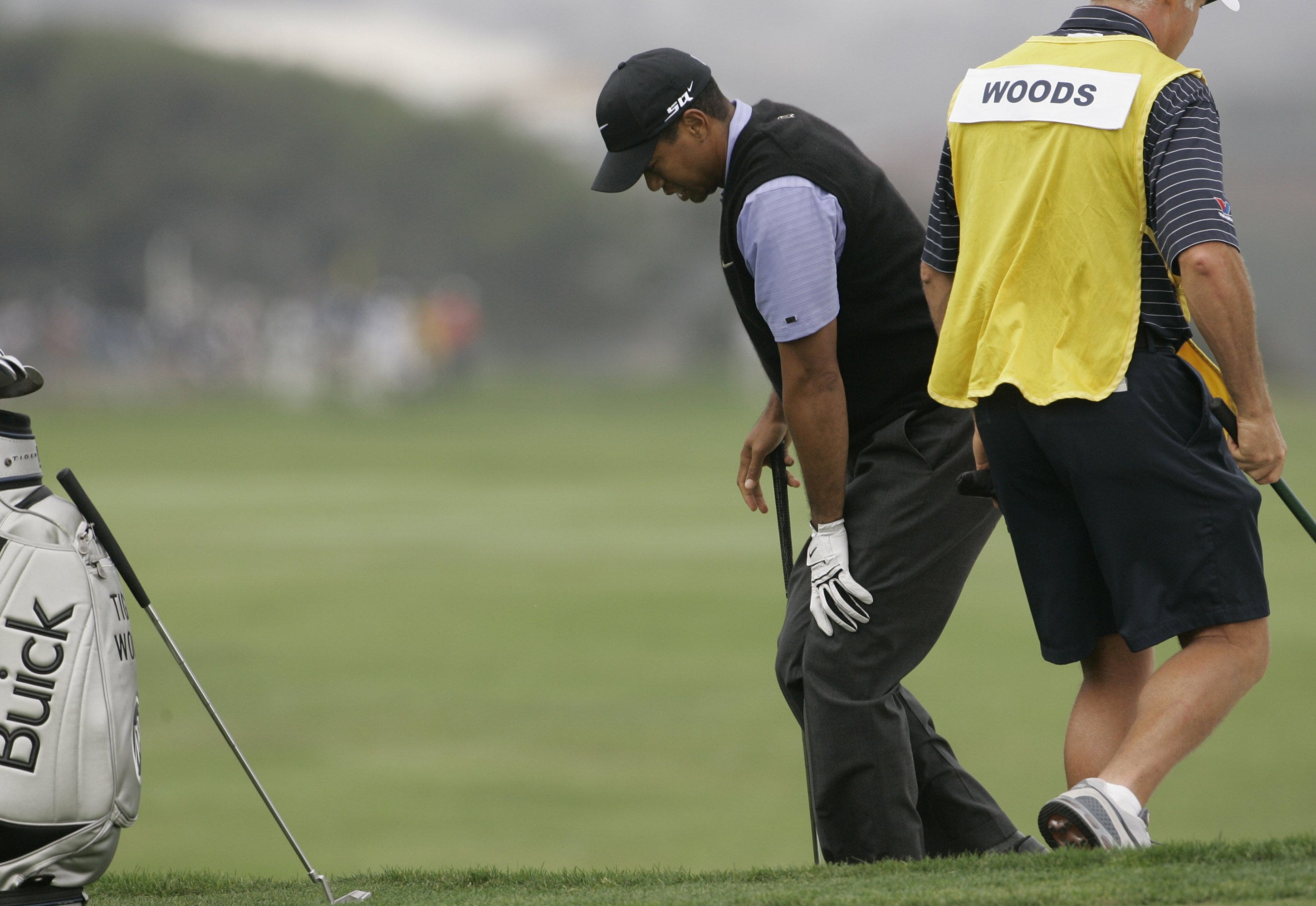
Sure, this is the US Open, it will present challenges that will warrant many more bogies and doubles than a standard tour event. But these are highly uncharacteristic starts for a major contender to make, let alone one of the game’s greatest.
Since then, several short documentaries have been made about the tournament, adding commentary from key players in the saga that unfolded that week at Torrey. Tiger’s caddy, Stevie Williams, offered insight into conversations had with Woods. Obviously, this is home turf, only miles away from where Woods grew up. Torrey Pines had been symbolic in Tiger’s early junior career, also a host to a standard tour event that Tiger has won seven times. He wanted this open. Perhaps as much as anything in his career.
What happens in your process when you ‘want it’ too much? Do you get ahead of yourself? Do you place unrealistic expectations on each shot? Do you get deflated or have flashes of anger when putts don’t drop?
Tiger’s performance at the 2008 US Open presents a master class in patience. Although pages could be written about the grit, determination present, it’s the ease and trust in his process that has captured my attention. In all four rounds, Tiger began the day directly behind the 8-ball. We see in play just after these moments, that Tiger continues, not erratically chasing pins but strategically taking on plateable risk, trusting that a focus on his predetermined process would be the most likely way he would hoist the trophy on Sunday (or Monday in this case).
This event is a valuable lesson in what proper mindset looks like. As mentioned earlier, tour golf on tv or online is an entertainment product. While I do enjoy the personalities that bring the game to life in that light, I appreciate the opportunity to just watch battle tested world beaters do the best they can do, in silence.
Growth Mindset
Psychologist Dr. Carol Dweck has been fundamental in sharing value in regard to mindset. Applied in many areas of personal and professional life. A proper mindset is imperative for sustained, long-term success.
In a talk linked below, Dr. Dweck highlights a successful private school and their grading process. There is no fail, only ‘not yet’. This sparks perhaps a radical change of attitude within the student body. It is not that you are not good enough, it’s that your not good enough now. Approaching each problem or test not as a pass/fail but as continued experience, that will inform future performance regardless of the result. The growth mindset is vital to success in tournament golf. How can we be so harsh on ourselves when a 3% tournament win rate at the highest level would most likely land you in the world golf hall of fame?
We have no choice but to foster this attitude. Not only does it help us in the long term. But it informs how we play each round. If you were to clearly define how many rounds and tournament rounds you have yet to play in your life, your perspective might change. If you are a Mid-Amateur golfer, age 30, you might have fifteen more years of Mid-Amateur golf, and perhaps twelve years, if lucky, of Senior golf. Averaging ten events a year, with an average of three rounds each, you’ll enjoy roughly 14,580 holes of competitive golf. Will any one of these shots, holes, or rounds make the difference in my enjoyment of this pursuit?
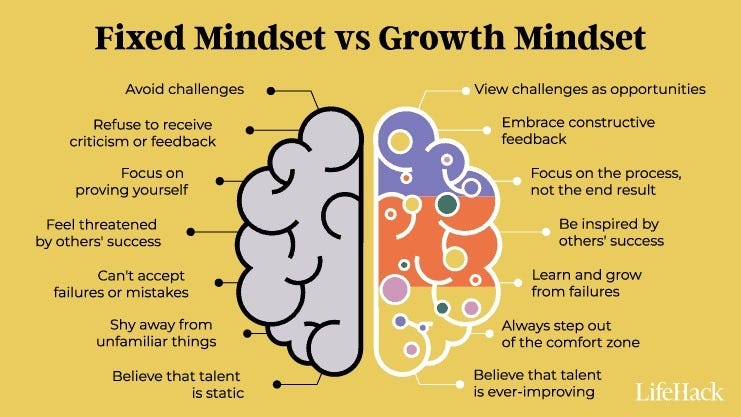
Dr. Dweck would continue in this talk discussing our approach in a ‘growth’ or ‘fixed’ mindset. She referenced brain scans of students engaged with a problem well beyond their abilities. She noted that children that presented characteristics of the growth mindset were found to have presented an enormous amount of brain activity when met with an error. Students involved in the study that presented characteristics of a fixed mindset had very little activity.
There are parallels to our golf games. A fixed mindset asks the question: “am I good enough today?” this often can extrapolate upon your whole experience “will I ever be good enough?”. When approaching events or challenges that you care about in this light, you are placing yourself in a near impossible situation, you are setting the stage for making a judgement call on your whole game, your whole ability (for some, your whole identity) all on seventy or eighty passes at a little white ball. Can you see how that doesn’t work?
The growth mindset golfer approaches each event with the knowledge that showing up and staying in process is a win. Experience is a win. Dealing with adversity is a win. Holing a few putts and hitting a few shots is a win. It’s not today that counts, it’s the whole package, the whole experience, the lifetime in golf that you’ve yet to get out there and enjoy.
As Dr. Dweck asks: Are you focusing on the now? Or are you focusing on the yet?
Curiosity
Allow curiosity to drive your game forward. Curiosity is a deep intrinsic motivator that will keep you sustained in times of frustration and doubt. Be curious in the love you have for this game. Why are you pursuing it? What do you love most about it? Take each step with curiosity of how great you really can get at this game. Don’t let that curiosity turn off the day of a big event, there is no such thing as a must make when you have a growth mindset. Each shot, each hole, each round is just a massive journey. As that journey unfolds, you’ll bring more experience to draw upon, improvement.
Perspective
Many players fall into the trap of listing out what they want in their career. Outcome goals that place unnecessary pressures on themselves at key moments. Qualify for the US Amateur, qualify for the US Mid-Amateur, win my club championship, make the cut at my state open.
This goal setting pattern only places expectation on the day of any of these qualifiers or tournament days. Not only this but it’s out of your control, if your goal is to qualify for the US Mid-Amateur this year, all you can do is shoot the lowest number possible. If you come in with three under, sixty-nine, finishing fourth at a site that only awarded two spots, that’s a big fat X on your goal sheet, that’s failure.
Except it cannot be that way! That day brought bouts of adversity, bouts of momentum, you would have hit several great shots and only a few poor ones, you would have battled down the last few holes knowing you are in position. These are experiences that are necessary for continued growth. Perceiving that day as failure is only dampening your chances of doing it one day. The stifling nature of the pass/fail attitude.
This attitude doesn’t just take pressure away from today, it helps you continue to move upward.
The Ramp vs. The Mountain Range
There are two perspectives one can take in their journey as a competitive golfer.
One, is known by many, the mainstream perspective, the mountain range. We all have a laundry list of things we hope to accomplish personally, professionally, and in our golf games. In this attitude we look up to a massive mountain range, each peak we see a small flag ‘qualify for state open’, ‘make match play at the state amateur’, ‘qualify for US Amateur’. Each of these accomplishments are great, if you want any of these, I hope you get there. However, when we view our progress only through the lense of the mountain range, we will have days of high importance, high intensity, high demand. Pass/Fail.
The other, is the ramp. The ramp of potential. Imagine standing at the base of a 35,000ft tall ramp, one that continues into the clouds. If you could see the top you would see a little banner, ‘Your Potential’. The ramp is your pursuit in competitive golf. Showing up every day with an open attitude to improvement, approaching each morning with balance not assigning days as more important or less. Each day is a small part of climbing that ramp. Your only duty is to show up and climb that ramp, failure only exists when you don’t show up and take that next step up.
The special part of this perspective is that it’s when you get discouraged should you look back, upon the mountain range, where some peaks are now below your altitude, enjoy the accomplishment, but more importantly enjoy the growth.
Any questions, feedback:
jon@praxisperf.com